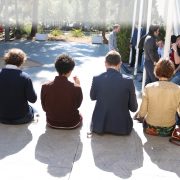
The KM3NeT Collaboration met in Siracusa
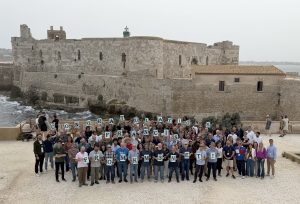
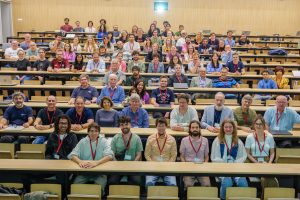
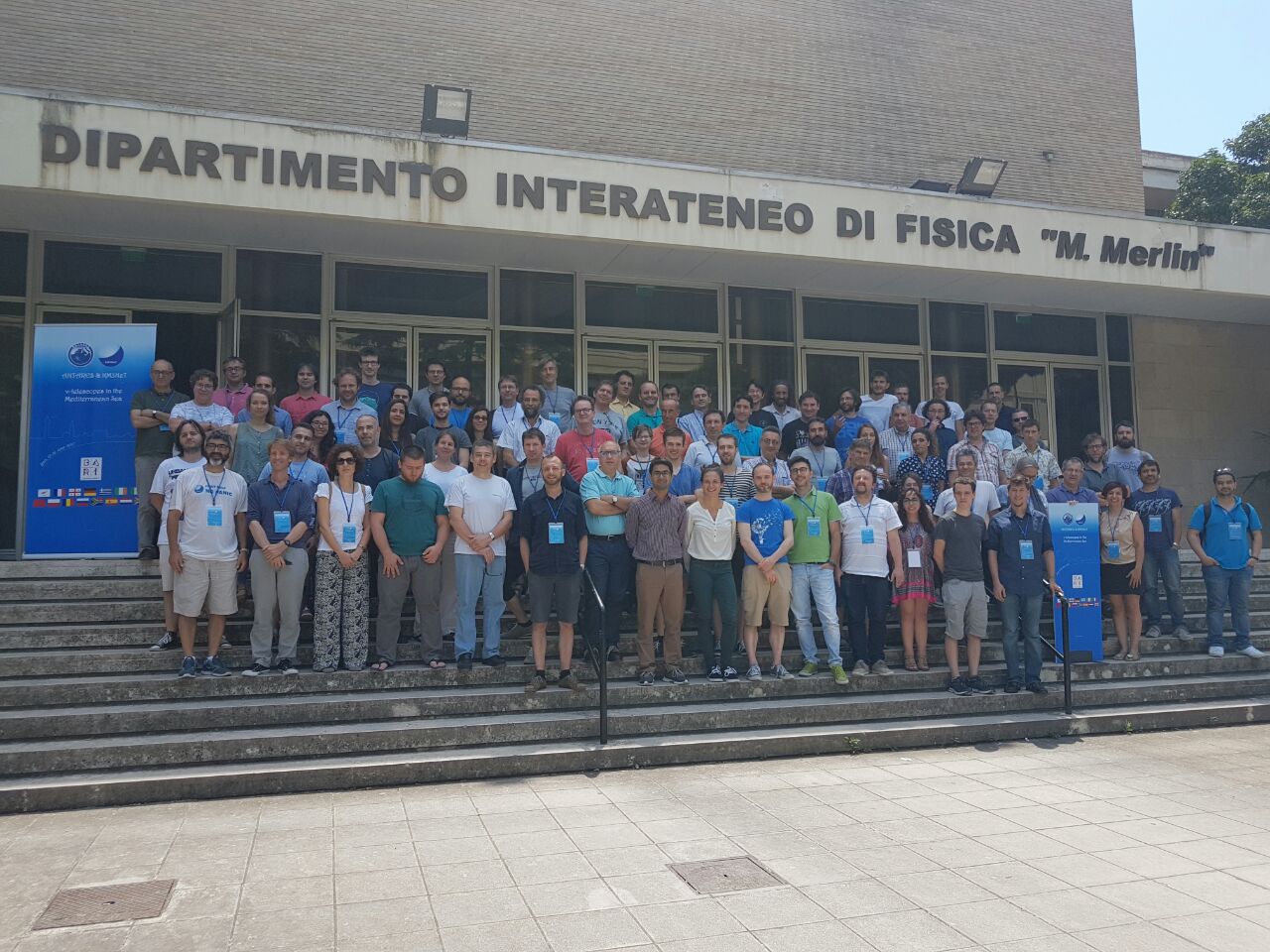
27 October 2026 – The KM3NeT Collaboration gathered the past week in Siracusa, Italy, for its Autumn 2026 Collaboration Meeting. Hosted on the island of Ortigia, the historical heart of Siracusa, the meeting brought together researchers and engineers from around the world for a full five-day program.
The agenda featured status updates on detector operations and deployment, discussions on calibration and data processing, and review of emerging scientific results across neutrino physics, cosmology and multi-messenger astronomy. The meeting was also an occasion to celebrate the success of the latest sea campaigns, welcoming the deployment of ARCA62 and ORCA44, and to pay a visit to the ARCA shore station in Portopalo di Capo Passero.
The meeting marked the first participation of the Italian National Institute for Astrophysics (INAF) as a full member of the Collaboration. Several partnerships were also reinforced or established: Dr. Carlos Argüelles’ team at Harvard University in the USA, which had been an observer institute for the past years, became full member of the Collaboration; INPE, the National Institute for Space Research in Brazil, with a team led by Márcio G. B. de Avellar, and the Laboratoire PRISM in France, with a team led by Fabien Clouette, were welcomed as observer institutes; finally, the status of associated scientists was recognized to Dr. Amani Besma Bouasla from CRMA, Centre de Recherche en Mathématiques Appliquées in Algeria, and to the team of Prof. José Manuel Carmona at University of Zaragoza in Spain.
Alongside the scientific and technical sessions, attendees took part in nice social activities, including the “Ortigia Sunrise” running event and a picture of the collaboration celebrating the 2026 Nobel Prize in Physics awarded to Francis Halzen, which highlights the importance of high-energy neutrino astronomy.
The Collaboration extends its sincere thanks to the Local Organizing Committee for their outstanding organisation and hospitality in Siracusa.
The next Collaboration meeting will be at CERN, in February 2027.